GLOW STACK
Space or ↓ to drop block · Esc to pause
Tap anywhere to drop block
Space or ↓ to drop block · Esc to pause
Tap anywhere to drop block
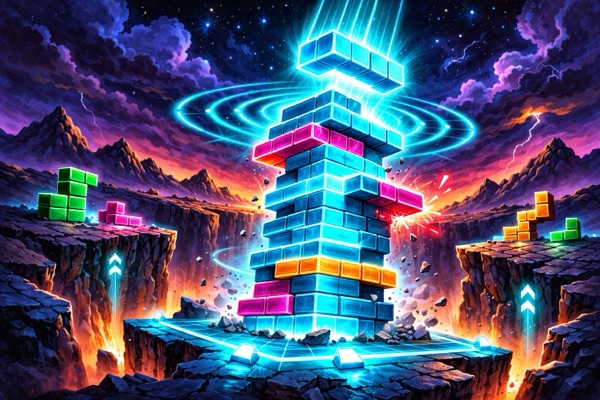
Glow Stack is a precision-timing puzzle game where glowing blocks slide back and forth and you must stack them perfectly on top of each other. Each new block moves faster than the last, narrowing the margin for error. Land a block perfectly aligned and it maintains its full width; misalign and the overhanging portion falls away, making subsequent stacks progressively harder. Build the tallest tower you can before the blocks become too narrow to stack. The neon glow effects intensify as your tower grows, with each perfect placement triggering a satisfying pulse of light. Simple to understand, fiendishly difficult to master — Glow Stack is the ultimate test of timing precision.
Focus on the leading edge of the moving block rather than its center — this gives you a more accurate visual reference. The speed increase is gradual, so use early placements to calibrate your timing. Perfect placements (where the block aligns exactly) are critical — they prevent width loss and sometimes trigger bonus effects. Don't panic when blocks get narrow; slow your breathing and trust your rhythm. Watch for the shadow/guide line that shows alignment. Many players perform best when they stop watching the moving block and feel the rhythm instead, placing by instinct.
Glow Stack descends from stacking games like Tetris but distills the concept to pure timing. The most direct ancestor is "Stack" (also known as "Stack Up"), a mobile game that became viral for its one-touch simplicity. The concept also echoes physical games like Jenga, where precision under pressure defines the experience. Stacking games test a fundamental human skill — timing — which explains their universal appeal across cultures and ages. Glow Stack's neon aesthetic transforms the minimal gameplay into a visual spectacle, proving that constraints often produce the most elegant game design.