GRAVITY DASH
Space / Click to flip gravity
Tap anywhere to flip gravity
Space / Click to flip gravity
Tap anywhere to flip gravity
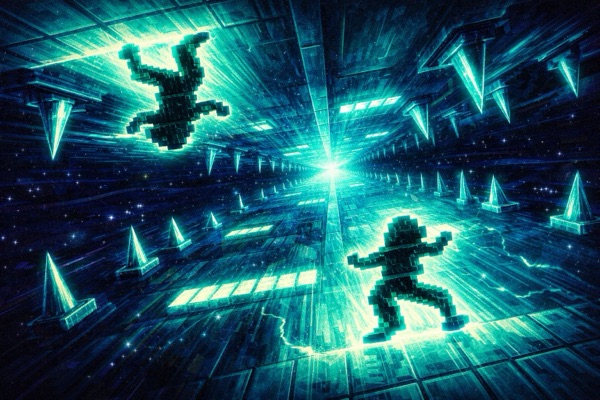
Gravity Dash is a high-speed runner where you flip gravity to navigate through a neon obstacle course. With a single button, you switch between running on the floor and ceiling, timing your flips to pass through gaps, avoid spikes, and collect orbs. The level scrolls automatically at increasing speed, and the terrain morphs between tight corridors, open caverns, and split paths that demand instant gravity decisions. Checkpoints mark your progress, but between them the margin for error is razor-thin. The dual-surface running creates a unique visual rhythm as your character bounces between ceiling and floor, leaving a glowing trail through the darkness.
Flip early rather than late — there's a brief transition time during gravity switches, and flipping too late means hitting obstacles. Learn to read the upcoming terrain: narrow vertical gaps mean you need to be on the correct surface before you reach them. Collect orbs when convenient, but never risk a death for a pickup. Some sections have a rhythm to them — flip-flip-pause-flip — and finding that pattern makes them trivial. On split paths, the ceiling route is often harder but has more orbs. Practice sections repeatedly; muscle memory is more reliable than reaction time in later stages.
Gravity-flipping runners exploded in popularity with VVVVVV (2010), which showed that a single mechanic — reversing gravity — could sustain an entire game. The Impossible Game (2009) and Geometry Dash (2013) further refined the auto-scrolling obstacle runner format. Gravity Dash combines both influences: VVVVVV's gravity switching and Geometry Dash's rhythmic obstacle courses. The one-button control scheme makes these games incredibly accessible yet punishingly difficult, creating the "easy to learn, hard to master" sweet spot. The genre has become a staple of browser and mobile gaming for its addictive retry loop.