ECHO BLITZ
Mouse to aim · Click to fire
Touch to aim & fire
Mouse to aim · Click to fire
Touch to aim & fire
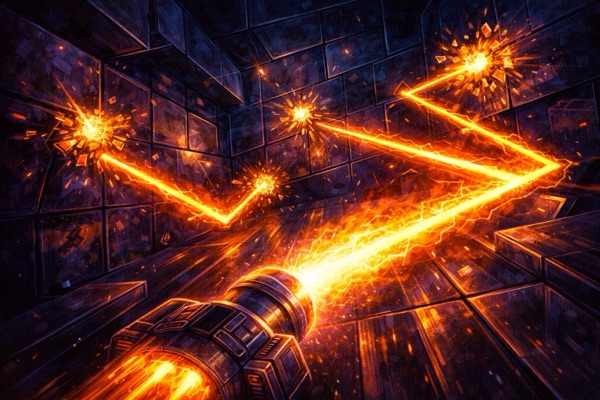
Echo Blitz is a rhythm-action hybrid where sound waves pulse across the screen and you must intercept them at the right moment. Each "echo" carries a timing window — hit it perfectly for maximum points, or miss and watch your combo shatter. The game generates patterns from procedural audio, meaning every session produces unique rhythms to master. As intensity escalates, echoes overlap, split into harmonics, and bounce off screen edges. Visual and audio feedback merge seamlessly: bass echoes pulse deep purple, treble echoes shimmer in cyan, and perfect hits trigger satisfying screen-wide flashes. Echo Blitz transforms raw reflexes into a musical experience.
Listen as much as you watch — the audio cues telegraph echo timing more accurately than visuals alone. Perfect timing multiplies your score exponentially, so precision matters more than speed. When echoes overlap, focus on the earliest one first; later ones give you more time than you think. Move your target zone to intersect common echo paths rather than chasing individual echoes. Bass (purple) echoes are slower but worth more; treble (cyan) echoes are fast but come in rapid chains. Build your combo early on easier patterns to bank a high multiplier for the intense sections.
Echo Blitz sits at the intersection of rhythm games and bullet-hell shooters. Rhythm games like Beatmania (1997), Guitar Hero (2005), and Osu! (2007) proved that timing-based gameplay creates deep skill expression. Echo Blitz's unique twist — procedurally generated rhythms — means players can't simply memorize patterns, borrowing from roguelike design philosophy. The "echo" concept draws from audio visualization software and the physics of sound reflection. The genre continues to evolve with games like Thumper and Crypt of the NecroDancer showing that rhythm mechanics enhance almost any game type.