PULSE BEAT
D F J K — hit lanes 1-4 · P to pause
Tap the 4 lane zones at the bottom
D F J K — hit lanes 1-4 · P to pause
Tap the 4 lane zones at the bottom
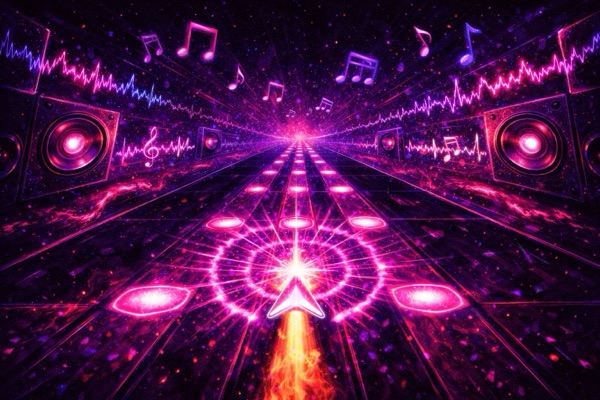
Pulse Beat synchronizes gameplay with a pulsing rhythm as you navigate a world that beats in time with the action. Every element in the game — platforms, enemies, hazards — moves on the beat. You must time your actions to the pulse: jump on the beat to gain height, attack on the beat for maximum damage, and dodge between beats when enemies strike. Visual cues pulse and glow in rhythm, creating a synesthetic experience where gameplay and music merge. Miss the beat and your actions are weaker and mistimed. Nail perfect timing chains and the game rewards you with screen-filling visual effects and massive score multipliers. Pulse Beat turns rhythm into a superpower.
Feel the rhythm before acting — the game gives visual pulses on every beat that you should internalize. Perfect-timed actions are dramatically more effective than mistimed ones; a perfect jump goes twice as high. Chain perfect beats to build multipliers — even 3 consecutive perfects start the bonus escalation. Watch the pulsing ring at the center of screen; its contraction matches the beat precisely. Enemies attack on the beat too, which makes them predictable — dodge on the off-beat when they're committed to their attack. If you lose the rhythm, stop and recalibrate rather than mashing; accuracy matters more than speed. Audio cues are more reliable than visual ones for timing.
Pulse Beat sits in the rhythm-action genre pioneered by PaRappa the Rapper (1996) and evolved through Crypt of the NecroDancer (2015), which proved that any game genre can be fused with rhythm mechanics. The concept of beat-synced gameplay dates to early music games like Rez (2001), where shooting enemies created music. Rhythm games engage a unique part of the brain — the motor cortex synchronizes with auditory processing to create "flow states" more readily than almost any other game type. Pulse Beat takes this concept further by making the rhythm affect physics itself: timing changes jump height, attack damage, and movement speed. The result is a game where musical skill directly translates to gaming skill.