GLYPH CHAIN
Click + drag through matching symbols
Touch + drag through matching symbols
Click + drag through matching symbols
Touch + drag through matching symbols
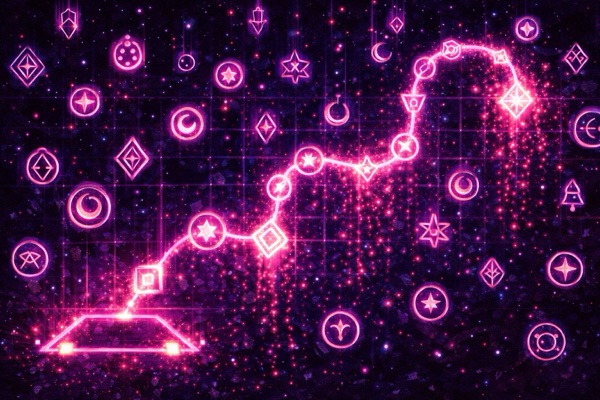
Glyph Chain presents a grid of mystical symbols and challenges you to connect matching glyphs in unbroken chains. Draw paths through adjacent matching symbols to clear them from the board, with longer chains yielding exponentially higher scores. Cleared spaces cascade as remaining glyphs fall into place, potentially creating new chain opportunities. Special glyphs add twists: bomb glyphs clear surrounding symbols, wild glyphs match anything, and locked glyphs require adjacent matches to free them. The board evolves constantly — new rows push up from below, and if glyphs reach the top, it's game over. Glyph Chain blends pattern recognition with strategic path planning.
Longer chains are always worth more than multiple short chains — a 7-chain scores more than two 3-chains and a single. Scan the entire board before starting a chain; the longest path isn't always obvious. Use bomb glyphs strategically to clear problem areas where mismatched glyphs are blocking potential chains. Wild glyphs are most valuable in the middle of a chain to bridge two matching groups. Focus on clearing the bottom of the board to prevent the upward push from reaching the top. When the board looks hopeless, look for L-shaped and zigzag paths you might have missed.
Glyph Chain belongs to the connect-and-match puzzle family popularized by games like Bejeweled (2001) and later refined by titles like Two Dots and Puzzle & Dragons. The chain-drawing mechanic specifically echoes Dungeon Raid and Pokemon Shuffle, where path planning adds strategic depth beyond simple swapping. Match-3 (and match-more) games generate over $3 billion annually, making them one of gaming's most successful genres. Glyph Chain's mystical symbol theme and cascading mechanics create a meditative yet challenging experience that rewards both quick pattern recognition and careful planning.