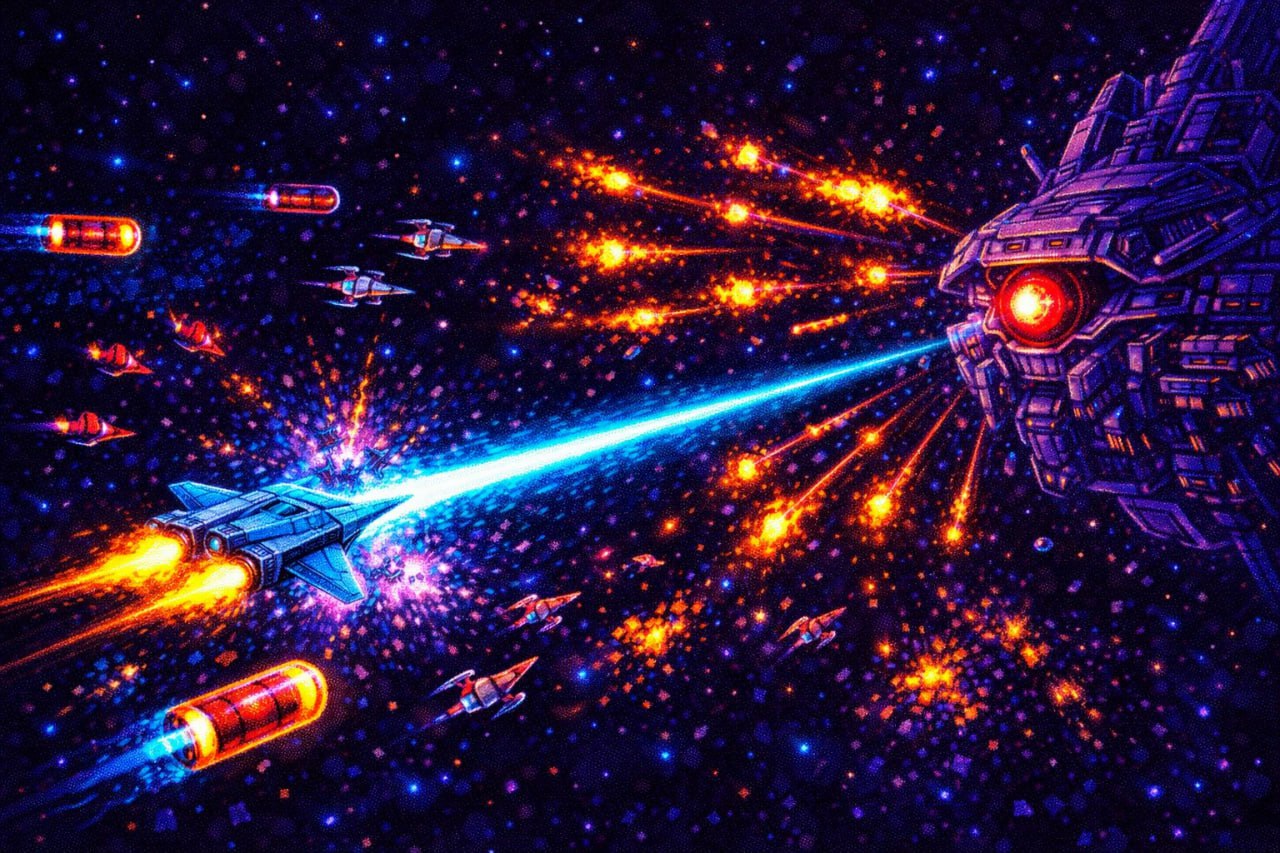
Star Sentry positions you as the last line of defense for a space station, manning a turret that rotates 360 degrees to intercept incoming threats. Asteroids tumble toward you, enemy fighters strafe past, and missiles lock on from the distance. Rotate your turret, lead your shots, and manage heat buildup from sustained firing. The turret overheats if you fire continuously, forcing tactical burst shooting. Shield power recharges slowly — take too many hits and the station falls. Radar blips warn you of incoming threats from off-screen, demanding constant awareness of all directions. Star Sentry delivers the fantasy of being the lone gunner holding the line against overwhelming odds.
Lead your targets — projectiles have travel time, and fast-moving fighters require significant aim-ahead. Manage turret heat by firing in short bursts; overheating locks you out of firing for a critical few seconds. Prioritize missiles (they home in and deal the most damage) over asteroids (slow) and fighters (they often miss). Use the radar constantly — threats from behind are the most dangerous because you must rotate 180°. Large asteroids break into smaller fragments; destroy fragments quickly before they spread. Shield regeneration starts only after a few seconds without taking damage, so surviving a barrage has delayed rewards. The turret rotates faster when not firing — release to aim quickly, then fire.
Star Sentry draws from the turret-defense genre that includes Missile Command (1980) and Beach Head (1983). The 360-degree turret concept appears in games like Star Wars arcade (1983), which let players man the Millennium Falcon's gun turret. The heat management mechanic adds tactical depth borrowed from mech games like MechWarrior. Turret defense games create a unique "last stand" narrative that resonates emotionally — you're stationary, surrounded, and outgunned, but your skill can turn the tide. This David-versus-Goliath dynamic explains the genre's enduring appeal from 1980s arcades to modern tower defense games.