NEON SNAKE
🎮 Arrows/WASD to steer | 📱 Swipe to turn
🎮 Arrows/WASD to steer | 📱 Swipe to turn
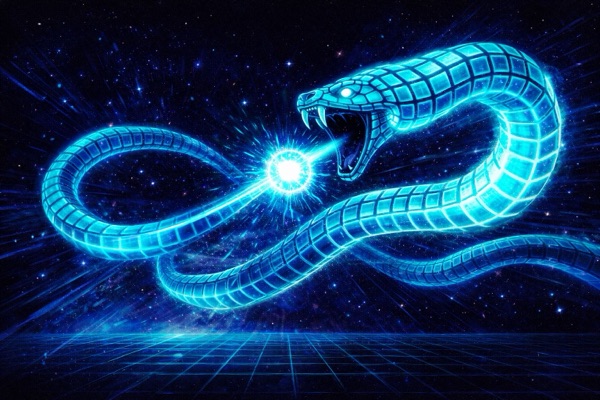
Neon Snake reimagines the classic Snake game as a glowing light-trail racer through a grid arena. Guide your snake to consume orbs that extend your body while avoiding your own ever-growing tail, arena walls, and barriers that appear in later waves. Special orbs add variety: prism orbs cycle through rainbow colors and score triple points but vanish on a timer, while glitch orbs offer massive points with unpredictable effects. The arena itself shrinks every four waves, compressing the playfield and increasing tension. A combo system rewards quick consecutive orb collections. With wave-based progression and escalating speed, Neon Snake transforms the simplest game concept into a deep arcade challenge.
Stay in the center of the arena early on — walls are the most common cause of death, and center positioning gives maximum reaction time. Collect orbs quickly in sequence to build combo multipliers. In later waves when barriers appear, create a mental map of safe paths. Don't chase prism orbs across the entire arena — if they're far away, their timer might expire. When the arena shrinks, reduce your movement pattern to tighter loops. Your tail is your biggest enemy; try to move in a consistent spiral pattern to keep it organized. Speed increases with waves but your reaction time doesn't — play more deliberately in later stages.
Snake originated on Nokia phones in 1997 (programmed by Taneli Armanto) but the concept dates back to Blockade (1976) and the Light Cycle sequence in Tron. The game became one of the most played games in history simply because it was pre-installed on over 400 million Nokia handsets. Snake's brilliance is its self-scaling difficulty: as you succeed (eating more), the game gets harder (longer tail to avoid). This elegant feedback loop requires no artificial difficulty adjustments. Google created a popular Snake game for its search page, and Slither.io brought multiplayer Snake to millions. Neon Snake adds wave progression, special orbs, and a shrinking arena to the timeless formula.