Pixel Art in Video Games: Why Retro Never Dies
In an era of photorealistic ray tracing and AI-generated textures, pixel art games continue to dominate indie charts, win awards, and capture hearts. This isn't nostalgia — it's something deeper.
📋 Contents
🎮 Why Pixel Art Endures: More Than Nostalgia
The easy explanation for pixel art's persistence is nostalgia. And sure, nostalgia plays a role — Millennials and Gen X grew up with NES and SNES, and pixel art triggers warm memories of childhood gaming. But that explanation falls apart when you consider that Gen Z and Gen Alpha love pixel art too, despite growing up with Fortnite and Roblox.
Something more fundamental is at work. Pixel art endures because it taps into core principles of effective visual communication:
1. Clarity Through Constraint
Pixel art forces deliberate design decisions. When you have 16×16 pixels to represent a character, there's no room for noise. Every pixel must serve a purpose. The result? Characters and environments that read instantly — you understand what you're looking at in milliseconds.
Compare this to photorealistic games where visual noise can make it hard to distinguish foreground from background, interactive objects from decoration. Pixel art's inherent clarity makes gameplay more readable.
2. The Power of Suggestion
Low-resolution art engages the player's imagination in ways that photorealism can't. When you see a 32×32 pixel character's face, your brain fills in the details. You imagine their expression, their personality, their story. This "imagination gap" creates a more personal connection than any high-polygon face scan.
It's the same principle that makes radio dramas more frightening than movies, or why the shark in Jaws was scarier when you couldn't see it. The audience's imagination is always more powerful than what you can show them.
3. Timelessness
Here's a truth that AAA publishers don't want to hear: photorealistic graphics age terribly. Games that pushed graphical boundaries five years ago look dated today. Games that pushed them ten years ago look embarrassing.
But pixel art? Super Mario Bros. 3 (1988) still looks gorgeous. Chrono Trigger (1995) is still breathtaking. Castlevania: Symphony of the Night (1997) still takes your breath away. These games will look just as good in another thirty years because they weren't chasing realism — they achieved a fully realized aesthetic on their own terms.
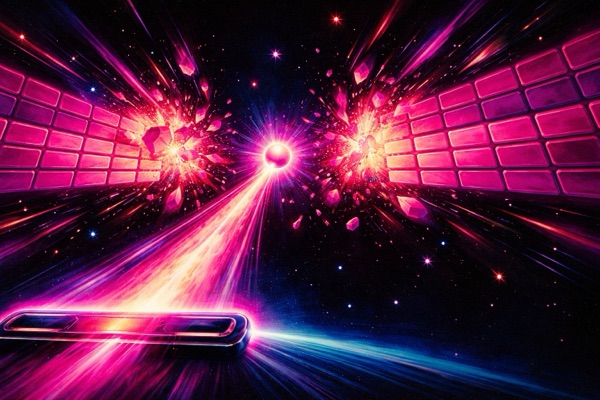
Neon Breakout
A timeless concept, pixel-perfect execution. Break bricks with neon style that'll never age.
4. Accessibility for Creators
A solo developer can create beautiful pixel art. A solo developer cannot create photorealistic 3D art. This accessibility means pixel art continuously attracts new creators, who bring fresh perspectives and push the medium in unexpected directions.
Tools like Aseprite ($20), Piskel (free), and even MS Paint are all you need. No $10,000 workstation required. No team of 200 artists. One person, one tool, infinite creativity.
🧠 The Psychology of Pixels
Research in visual perception supports what pixel artists have always known intuitively:
The Science Behind Pixel Art's Appeal
- Pattern recognition — The human brain is wired to find meaning in simple patterns. Pixel art leverages this by presenting minimal visual information that the brain eagerly interprets.
- Emotional distance — Stylized graphics create a comfortable emotional buffer that allows players to engage with intense themes (death, violence, loss) without the visceral discomfort of photorealism.
- Flow state — Clean, readable visuals reduce cognitive load, making it easier to enter "the zone" during gameplay. This is why many competitive players prefer simpler graphics.
- Color psychology — Limited palettes force careful color choices. Many classic pixel art games use color theory principles that evoke specific moods — the warm oranges of a sunset level, the cold blues of an ice world.
There's also a tactile quality to pixel art that resonates in our increasingly smooth, rounded, gradient-heavy digital world. Pixels are crunchy. They have edges. They feel handmade in an era of algorithmic generation. That authenticity matters more than ever.
🏆 Iconic Pixel Art Games That Defined the Medium
Certain games didn't just use pixel art — they defined what pixel art could be. These are the Mount Rushmore of pixel art gaming:
Super Mario Bros. (1985) — The Foundation
Shigeru Miyamoto's masterpiece set the template for pixel art game design. Mario's design is a case study in constraint-driven creativity: his cap (because animating hair was too complex), his mustache (to avoid animating a mouth), his overalls (to make arm movement visible). Every design decision served gameplay clarity.
But beyond character design, Super Mario Bros. established the visual language of platformers: question blocks, brick blocks, pipes, coins. These pixel art icons are recognized worldwide — more universally understood than most road signs.
The Legend of Zelda: A Link to the Past (1991) — The World Builder
If Mario defined pixel characters, A Link to the Past defined pixel worlds. Its top-down Hyrule was a living environment rendered in 16-bit pixel art — rain splashed on cobblestones, grass swayed in the wind, shadows crept across dungeon floors. It proved that pixel art could create immersive, atmospheric worlds.
Final Fantasy VI (1994) — The Storyteller
Squaresoft's magnum opus proved pixel art could make you cry. The opera scene — where Celes sings atop a pixel art stage while Mode 7 effects create depth — remains one of gaming's most emotionally powerful moments. All conveyed through 16×24 pixel sprites and a SNES sound chip.
Castlevania: Symphony of the Night (1997) — The Evolutionist
Released into a market obsessed with 3D, SotN defiantly proved 2D pixel art still had new ground to break. Its inverted castle mechanic doubled the game's content, and its fluid sprite animation raised the bar for what 2D games could feel like. Alucard's cape animation alone is a pixel art masterclass.
Cave Story (2004) — The Prophet
Daisuke "Pixel" Amaya (yes, his nickname is literally "Pixel") single-handedly created Cave Story over five years. This free indie game predicted the entire indie pixel art renaissance by nearly a decade. Its NES-inspired aesthetic, emotional story, and perfect gameplay loop showed that one person with passion could create something that rivaled studio productions.
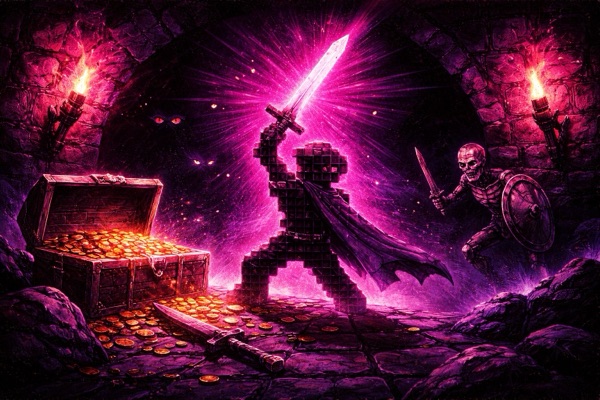
Pixel Dungeon
Explore procedurally generated dungeons in this roguelike inspired by the classics. Every run is different.
🌟 Modern Indie Games Keeping Pixel Art Alive
The indie scene hasn't just preserved pixel art — it's pushed the medium into places the original hardware creators never imagined:
Celeste (2018) — Emotion in Every Frame
Celeste is a precision platformer about climbing a mountain and battling anxiety. Its pixel art is deceptively simple — Madeline's sprite is tiny — but the animation is extraordinary. Hair physics, environmental particles, screen-shake feedback, and color palette shifts that mirror the character's emotional state. It won Best Independent Game at the 2018 Game Awards.
Stardew Valley (2016) — One Person's Masterpiece
Eric "ConcernedApe" Barone created Stardew Valley entirely alone — code, art, music, story, everything. Its pixel art is warm, inviting, and seasonal. The game has sold over 30 million copies, making it one of the best-selling indie games ever. Its success inspired a generation of solo developers to pursue pixel art games.
Dead Cells (2018) — Pixel Art in Motion
Motion Twin's roguelike blurred the line between pixel art and traditional animation. Dead Cells uses a technique the team calls "pixel art with a modern twist" — traditional sprite work enhanced with procedural animation, particle effects, and dynamic lighting. The result feels like pixel art moving at 60fps in ways the SNES never could.
Katana ZERO (2019) — Pixel Art Noir
Askiisoft's neo-noir action game proved pixel art could be stylish, violent, and narratively complex. Its use of pixel art for slow-motion effects, dream sequences, and unreliable narrator visuals showed the medium's untapped potential for artistic expression.
Sea of Stars (2023) — The New Benchmark
Sabotage Studio's RPG is arguably the most technically impressive pixel art game ever made. Dynamic lighting, detailed character animations, and environments that rival concept art in their beauty — all rendered pixel by pixel. It's a love letter to Chrono Trigger that pushes far beyond what the SNES could do while maintaining the soul of 16-bit art.
Balatro (2024) — Minimal Pixel, Maximum Impact
Proof that pixel art doesn't need to be elaborate. Balatro's card-based roguelike used relatively simple pixel art aesthetics to become one of 2024's biggest indie hits. The lesson: pixel art works at every level of complexity, from a few pixels to thousands.
🎨 The creative chain continues: Want to see how these design principles translate to browser games? We build every game at PixelArtNerds by hand, applying the same pixel-perfect philosophy that made the classics great. Browse our collection and see the tradition in action.
🌐 The Rise of Browser-Based Pixel Art Games
There's a quiet revolution happening in pixel art gaming, and it's happening in your browser tab.
Modern web technologies — HTML5 Canvas, WebGL, Web Audio API — have made it possible to create console-quality pixel art games that run instantly in any browser. No downloads. No installs. No app store approval process. Just click and play.
This matters because it removes the single biggest barrier to gaming: friction. When someone discovers a cool game, every step between "that looks fun" and "I'm playing" is a potential drop-off point. Downloads, installations, account creation, payment — each step loses players. Browser games eliminate all of them.
The Flash era proved this model worked — Newgrounds and Kongregate were massive. But Flash died in 2020. HTML5 picked up the torch, and the new generation of browser pixel art games is technically superior in every way.
Why Browser Games Are the Future of Pixel Art
- Instant access — Share a link, someone's playing in seconds
- Cross-platform — Works on any device with a browser (phone, tablet, laptop, desktop)
- No gatekeepers — No app store review, no console certification, no publisher approval
- Low overhead — Developers can focus on gameplay and art instead of platform compatibility
- Perfect for pixel art — Pixel art's small file sizes mean instant loading, even on slow connections
This is exactly the philosophy behind PixelArtNerds. Every game in our collection is a handcrafted, browser-native pixel art experience. No accounts, no payments, no downloads — just pure arcade energy.
🕹️ Play Pixel Art Games Now
The best way to understand why pixel art endures? Play it. Here are some of our favorites from the PAN collection — each one demonstrating different aspects of pixel art's timeless appeal:
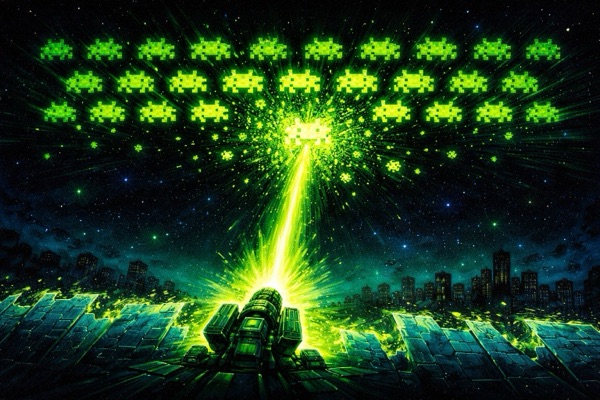
Pixel Invaders
Classic Space Invaders gameplay with a neon pixel art makeover. Proves that 1978's design still works perfectly.

Neon Snake
The most minimal pixel art game concept — a line that grows — made gorgeous with neon aesthetics.
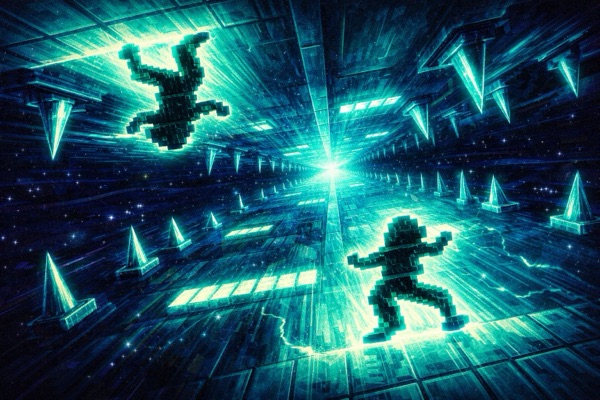
Gravity Dash
Fast-paced platforming with gravity-flipping mechanics. Modern pixel art design meeting classic arcade challenge.

Pulse Beat
Rhythm meets pixel art. Tap to the beat in this synesthetic experience where visuals and music merge.
🎮 The Full Arcade Awaits
30+ handcrafted pixel art games. Free. Instant. No downloads. This is what pixel art gaming looks like in 2026.
▸ Browse All Games